


.png)
WANDA Knows the Truth: Soul Food Was Never the Problem—Forgetting Its Power Was
- IamWANDA org
- May 28
- 2 min read

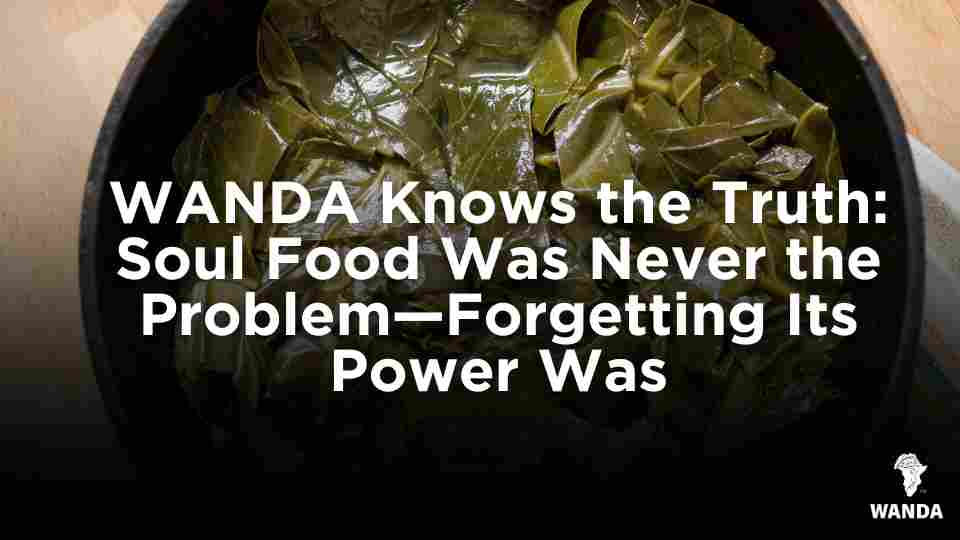
For decades, soul food has been blamed for the very health disparities harming Black communities. Headlines warned us about salt, fat, sugar, and hypertension. Public health campaigns often spoke about our foods without speaking to our history, our resilience, or our wisdom.
But what if the story was never that simple?
In a powerful new editorial for Public Health Post at Boston University School of Public Health, James Beard Award–nominated scholar Dr. Bobby J. Smith II revisits the groundbreaking work of Jonell Nash, the longtime food editor of Essence magazine who challenged harmful narratives about soul food long before “Food as Medicine” became a national movement.

Nash understood something many systems overlooked: our foods were never the enemy.
Collard greens. Black-eyed peas. Sweet potatoes. Okra. Millet. Hibiscus tea.
These foods carried nutrients, memory, migration stories, and survival strategies across generations and continents. Nash argued that the issue was not the cultural foods themselves, but the conditions, policies, and inequities shaping how communities accessed, prepared, and understood them.
That philosophy reverberates deeply through the work of WANDA.
In fact, Dr. Smith specifically names WANDA as part of the growing movement reclaiming Black food traditions as pathways to healing and public health transformation. At WANDA, we believe food is more than fuel. It is medicine. It is identity. It is story. It is belonging.

That belief came alive through WANDA Academy’s NOURISH: Maternal Food as Medicine program, where doulas, birth workers, and maternal health advocates gathered around shared meals, storytelling circles, and African Diaspora foodways to reconnect culture and care. Participants learned how foods like collard greens, sweet potatoes, beans, and traditional soups support maternal health through modern nutrition science while also restoring dignity and trust in ancestral wisdom.
One participant said:
“I never knew our foods could be framed as medicine—that shift alone changes how I teach moms.”
Another reflected:
“This wasn’t just a course. It was a calling. I found my way back to healing through food.”
This is why gatherings like Sisterhood Supper matter. Long before wellness became an industry, Black women gathered around tables to nourish bodies, exchange wisdom, grieve, celebrate, organize, and heal communities together. Sisterhood Supper continues that tradition by transforming meals into spaces of connection, storytelling, joy, and collective healing.
As we prepare for the upcoming Sisterhood Supper: Juneteenth Celebration during WANDA Week, we invite you to reflect on Dr. Bobby Smith Jr.’s timely reminder: our food traditions are not relics of the past. They are blueprints for healthier futures.
📖 Read the article by Dr. Bobby Smith Jr.: Soul Food as Medicine: How Jonell Nash Redefined Black Public Health
🌻 Then join us for the upcoming Sisterhood Supper: Juneteenth Celebration during WANDA Week as we gather around the table to honor freedom, food, healing, and community.
Because healing does not happen in isolation. Sometimes it begins with a story. A recipe. A remembered flavor. And a seat at the table.


Comments